We parked on South Denning Drive at 8:04 on a Tuesday with the gate at Mead Botanical Garden still half-shut. A jogger crossed in front of the truck, two strollers came up behind her, and the live oak canopy was already throwing the kind of sideways morning light that makes the boardwalk look like a film set. We came for a shoot half a mile away. We stayed fifteen minutes anyway.
Winter Park 32789 is the residential core of the City of Winter Park in Orange County, threaded by the Chain of Lakes and shaped by a tree canopy the city actively protects. The ZIP holds 26,399 residents and a median age of 43.8 years per the ACS-derived ZIP profile. Most of what sells here sells because of the canopy, the school zones, and the lakes, in some order. The houses that fight that order tend to chase the market down.
What we noticed
Mead Botanical Garden covers 47.6 acres on a wedge of hammock and wetland the city has held since 1940. At eight in the morning the parking lot was already two-thirds full and the wood-chip path past the amphitheater was busy. The light through the oaks reads warm orange against the boardwalk, which is the half-hour window most listing photographers miss because it ends before the agent shows up. The same light hits the brick streets four blocks east of the garden and stops doing it by 9:15.
Two blocks east, the residential blocks on the way to Rollins College were the opposite story. South-facing front elevations were already in dappled shadow. Roof lines on the 1950s ranches were patchy. A house at the corner had a fresh real estate sign in the yard and a camera tripod on the lawn, set up at 9:15 into the worst light of the day. The photographer would be back the next morning. We could tell because we have made the same mistake on the same street.
Behind us, the Saturday before, Park Avenue had been packed for the vendors at the Winter Park Farmers' Market and the brick streets had read the same way: warm in the first hour, flat by mid-morning, warm again past four. That light has a name on the calendar. Buyers in 32789 walk in it every weekend without thinking about it. Most listing photos do not. The agents who win listings here keep a notebook of which side of the street the canopy opens up on, and when.
A block from the garden gate, two Rollins students were buying coffee at The Glass Knife on South Orange Avenue. The window light hit the bakery counter at the same low angle that hit the boardwalk. There is one hour in a Winter Park morning where everything inside a 32789 frame reads the same temperature, and that hour decides which exteriors a buyer remembers.
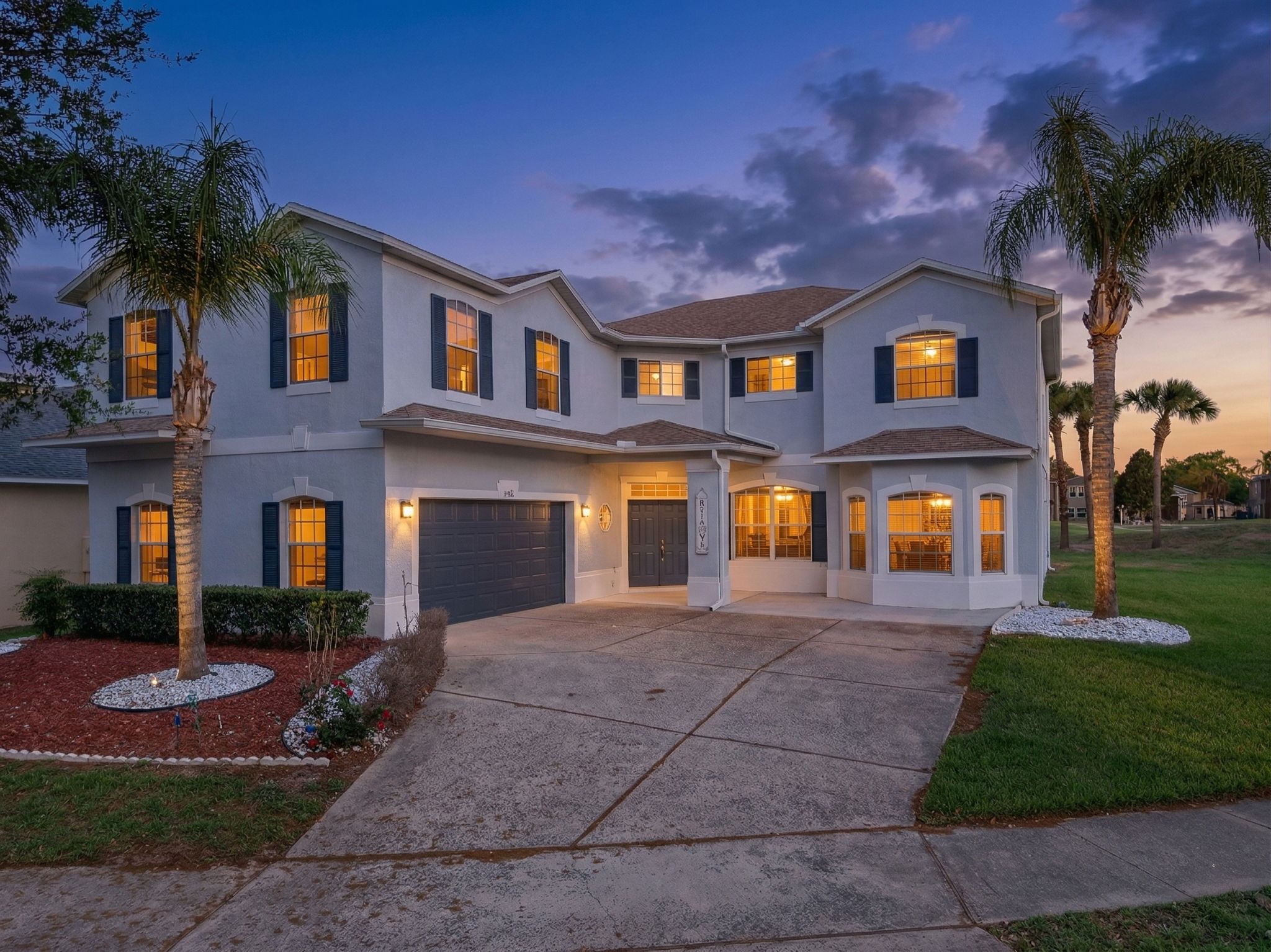
The houses that move on these streets are the ones that get the canopy right. The 1963 mid-century at 1981 Blue Ridge Road is now listed at $1,150,000, down from $1,285,000 last August. The lot is a 0.33-acre corner inside the Audubon Park K-8 zone, which on paper should clear quickly. The home has been chasing the market down for nine months because the front elevation faces south and the marketing photos were shot at noon. That is not a finish problem. That is not a price problem. That is a calendar problem, and the calendar problem is the most expensive one a 32789 seller can make.
The Audubon Park K-8 zone alone is small enough that a single block can decide the school assignment, which makes a clean front-elevation frame the difference between a listing that closes inside the school-search window and one that does not. Buyers cross-reference school maps in the same scroll where they read the first photo. The Blue Ridge listing has both. It is missing the third thing.
The photographer's read
The shoot-day rule in 32789 is straightforward. Live oak coverage runs heavy from Lee Road south to Fairbanks, which means a south-facing front between 11 a.m. and 2 p.m. is sitting in dappled shade no camera reads clean. Shoot front elevations at 8:30 a.m. or after 4:30 p.m. East-facing fronts along Interlachen and Genius Drive carry the morning. West-facing patios over Lake Osceola and Lake Maitland carry the evening, with sunset behind the canopy at roughly 6:40 p.m. in October. The brick streets read warm to the preset and want a manual white balance correction, not a slider nudge in post.
The garden was empty by 9:30 the next morning. The jogger was gone, the strollers were gone, and the light had flattened into the high overhead glare that gives the rest of the day to interiors. The boundaries, the schools, and the comp set get the full read at /neighborhoods/winter-park-32789.