Most people shopping Winter Park 32789 assume the entire ZIP delivers the Park Avenue walkability they see in the photos, then discover during showings that the pedestrian infrastructure drops off sharply beyond a half-mile radius and the price-per-foot spread reflects it. The better approach is to map your actual lifestyle priorities against the three sub-markets within the ZIP: the Park Avenue core, the lakefront band, and the residential west, each trading at different velocity and different per-foot numbers.
The Q3 2024 median single-family sale price landed at $725,000, an 88% premium over the broader Orange County median, and days on market sit at 38 days, steady but softer than the pre-pandemic sprint.
Who is buying in 32789 right now, and what are they paying?
The short answer
The median single-family sale price in 32789 hit $725,000 in Q3 2024, with homes moving in a median 38 days. Buyers are splitting into two camps: those paying $285-$310 per square foot for walkable blocks near Park Avenue, and those accepting $240-$270 per foot a mile west where the pedestrian grid ends.
Walk a showing in 32789 on a Saturday morning and you'll hear the same question twice: once at the curb when the buyers step out of the car and see the oak canopy, and again ten minutes later when they realize the coffee shop they passed on Park Avenue is a 20-minute walk, not a five-minute one. The price spread reflects that gap.
puts 32789 at an 88% premium over the Orange County median of $385,000, but the ZIP itself isn't uniform. Homes within a half-mile of Park Avenue trade at , while properties a mile west, same schools, same ZIP, no sidewalk continuity, settle closer to $240-$270 per foot. Lakefront and lake-view lots command another 15-25% premium on top of the walkable-block baseline, depending on the lake and the setback.The buyer pool skews two directions. Empty nesters and young professionals without school-age children prioritize the Park Avenue corridor and will stretch budget to stay within the pedestrian half-mile. Families with elementary-age children often trade walkability for square footage and yard, landing in the western blocks where
stretches closer to 50-60 for anything priced above $800,000.Inventory remains tight relative to demand. Late November 2024 showed 47 active single-family listings across the entire ZIP, which translates to roughly 2.1 months of absorption at the current pace. Compare that to adjacent ZIP 32792, where the median sits at $485,000, or 32790 at $520,000, and you see the premium buyers are paying to stay inside the Winter Park city limits and school zones.
If you're buying here in the next six months, the play is knowing which half-mile you're actually in before you write the offer. The address says Winter Park, but the walkability premium only applies to about 40% of the ZIP's residential blocks.
What do the schools actually deliver in this ZIP?
The short answer
Winter Park 32789 feeds into Winter Park High School, which ranks in the top 15% of Florida high schools, but the ZIP itself splits between Showalter Elementary and Winter Park Middle School, and boundary lines shift every few years as enrollment pressure builds. Buyers shopping here cite schools as a top-three reason, but the district's reputation carries more weight than any single campus's current performance data.
The school question in 32789 is less about test scores and more about whether the address lands you inside the Winter Park district at all. The ZIP sits entirely within Orange County Public Schools, and the Winter Park feeder pattern is the draw, but parents touring homes here discover that elementary boundaries in particular have moved twice in the last decade as the city's population density climbed.
Winter Park High School consistently places in
, which is the number buyers repeat during showings. The middle school and elementary campuses serve the ZIP without the same statewide visibility, and because Orange County reassigns students based on capacity rather than legacy attendance zones, a home that fed into Showalter Elementary in 2022 might feed into a different campus by 2025.The perception piece is real. We've shot listings where the agent's first line in the remarks is "Winter Park schools," even when the property sits a quarter-mile outside the highest-performing elementary boundary. The brand carries enough weight that buyers from out of state assume the entire ZIP delivers the same academic outcomes, then spend the inspection period verifying which campus their kids would actually attend.
What matters more than any single school's current ranking is the district's long-term trajectory. Winter Park's school facilities are older than most of the new-build districts in Lake Nona or Windermere, but the parent involvement and funding base are higher, and that shows up in extracurriculars and teacher retention more than it does in a GreatSchools number. If you're buying here for schools, confirm the current boundary with the district office before you write the offer, not after.
How walkable is Winter Park beyond the Park Avenue corridor?
The short answer
Winter Park's pedestrian infrastructure concentrates in a tight half-mile radius around Park Avenue and Central Park, where morning coffee runs and Saturday farmers market walks happen car-free. Beyond that corridor, residential blocks stay quiet and tree-lined, but sidewalk gaps, wider street spacing, and the shift to car-dependent errands mean true walkability ends where the oak canopy begins.
Most buyers touring 32789 for the first time assume the entire ZIP delivers the Park Avenue experience they see in the Instagram reels: sidewalk cafés at 8am, the Saturday farmers market spilling into Central Park, evening strolls past Kraft Azalea Garden with the lake catching the last light. That version of Winter Park is real, but it lives in a concentrated zone. Walk half a mile west or north from Park Avenue and the pedestrian density drops. The tree canopy stays, the blocks stay quiet, but the errands shift back to the car.
The price spread tells the story. Homes within that half-mile walkable radius traded at
in Q3 and Q4 2024, while comparable single-family homes a mile west landed closer to $240-$270 per square foot. Buyers pay the premium for the morning routine: walk to Barnie's or Starbucks before 9am, hit the Saturday farmers market without moving the car, take the dog to Central Park after dinner. That's the product, and it's priced accordingly.Beyond the corridor, the residential blocks north and south of Park Avenue still deliver the aesthetic, mature oaks, wide setbacks, a mix of 1920s Mediterranean Revival and newer construction, but the infrastructure shifts. Sidewalks become intermittent. The grocery run, the pharmacy pickup, the weeknight dinner out all require the car. Traffic stays light on the residential streets themselves; Park Avenue peaks between 9am and noon on weekdays and stays busy all day Saturday, but the side blocks stay quiet. I-4 access via Fairbanks Avenue puts you five minutes from the interstate and fifteen to twenty minutes from downtown Orlando off-peak, so the commute works, but the walk-to-everything promise shrinks to a walk-to-some-things reality once you're outside that tight core.
If walkability is the deciding factor, the search narrows to blocks bounded roughly by Fairbanks to the south, Morse Boulevard to the north, and a half-mile east-west span from Park Avenue. Inside that zone, the car-free morning is realistic. Outside it, Winter Park still delivers the canopy and the quiet, but the pedestrian part of the equation fades fast.
What do the parks and lakefront access actually give you?
The short answer
Central Park anchors a Saturday morning routine, farmers market, lakefront trails, open lawn, while Kraft Azalea Garden offers quieter lake views a mile south. The parks work best early morning or late afternoon; summer afternoons push most outdoor activity indoors until evening. Access is walkable from blocks within half a mile of Park Avenue.
The 51-acre Central Park sits at the center of the ZIP, lake on one side, Park Avenue shops on the other. Saturday mornings between 7am and noon, the farmers market fills the west lawn, produce, coffee, prepared food, and the foot traffic spills onto the lakefront trail that wraps the park's north edge. The light off Lake Osceola that early is the reason people walk it before the heat sets in.
Kraft Azalea Garden, a mile south on Alabama Drive, is the quieter counterpoint. It's 1.3 acres, lakefront, free, and almost never crowded. Native plantings, a short loop trail, benches facing the water. Residents use it for a 20-minute walk when Central Park feels too social or when they want lake views without the weekend crowd.
Both parks connect to the Winter Park chain of lakes, but public boat launch access for residents is limited. Lake Maitland has a public ramp on the north edge of the ZIP, but most lakefront property in 32789 is private. If you're buying for water access, check whether the home includes deeded lake rights or a dock; the parks give you views and trails, not a place to keep a boat.
The Parks & Recreation department runs youth sports leagues, summer camps, and evening fitness classes at Central Park, but programming is lighter than what you'd find in a newer master-planned community. The infrastructure is historic, not amenity-heavy. You get green space, shade, and proximity to the Avenue. You don't get a resort-style pool complex or a dedicated dog park.
Summer weather is the limiter. June through September, outdoor routines compress into early morning and post-sunset. The parks are there, but between 11am and 6pm, most residents are indoors. The appeal is the option, not the guarantee of year-round outdoor living. If you're coming from a climate where you walk outside every afternoon, adjust expectations or plan around the season.
What are the trade-offs buyers don't see until they live here?
The short answer
Winter Park 32789 delivers walkability and canopy, but property taxes run higher than many out-of-state buyers expect, summer heat limits outdoor routines from June through September, and price per square foot swings $40 to $70 depending on how close you land to Park Avenue. The ZIP rewards those who value proximity over square footage.
The first summer catches most newcomers off guard. You can walk to Park Avenue for coffee at 7am, but by 10am in July the humidity has already pinned you indoors until evening. Residents who moved from the Northeast or West Coast expecting year-round outdoor mornings adjust their routines or they don't stay long. The lakefront trails at Kraft Azalea Garden see their heaviest foot traffic before 8am and after 6pm from May through October. If your daily rhythm depends on a midday walk or an afternoon jog, Winter Park asks you to rethink the clock.
Property taxes are the second surprise. Florida has no state income tax, which draws retirees and remote workers, but Orange County's millage rate and the ZIP's assessed values mean a $725,000 home here carries an annual tax bill around $10,000 to $12,000. That's roughly double what the same buyer paid on a similarly priced home in parts of Georgia or the Carolinas. The trade-off is explicit: you keep more of your paycheck, but the county takes its share through property.
Price per square foot variance inside the ZIP is wider than most buyers expect.
versus $240 to $270 for homes a mile west tells you that walkability commands a premium. A 2,400-square-foot home two blocks from the Avenue costs $60,000 to $80,000 more than the same footprint near the western edge of the ZIP. If you're buying for the address but planning to drive everywhere anyway, you're paying for access you won't use.Hannibal Square, the historically Black neighborhood west of the railroad tracks, is in the middle of gentrification that longtime residents describe as displacement. New buyers see renovated bungalows and coffee shops; longtime owners see property taxes rising faster than fixed incomes allow. The tension is real, and it shapes the neighborhood's character in ways a weekend drive-through won't reveal. If community continuity matters to you, it's worth spending time in the Square before you close.
The ZIP rewards buyers who value proximity and canopy over square footage and who can absorb the property tax load without stretching. If you need 3,000 square feet and a low tax bill, Lake Nona or Clermont will serve you better. If you want to walk to dinner and wake up under oaks, Winter Park is the play.
What does it look like when we shoot a listing here?
The short answer
Winter Park listings photograph around mature oak canopy, lakefront views, and the Park Avenue corridor as primary visual anchors. Golden hour shoots on tree-lined residential blocks and lakefront properties deliver the strongest stills and reels, with the historic architecture and low-density streetscape providing natural depth that newer master-planned communities can't replicate.
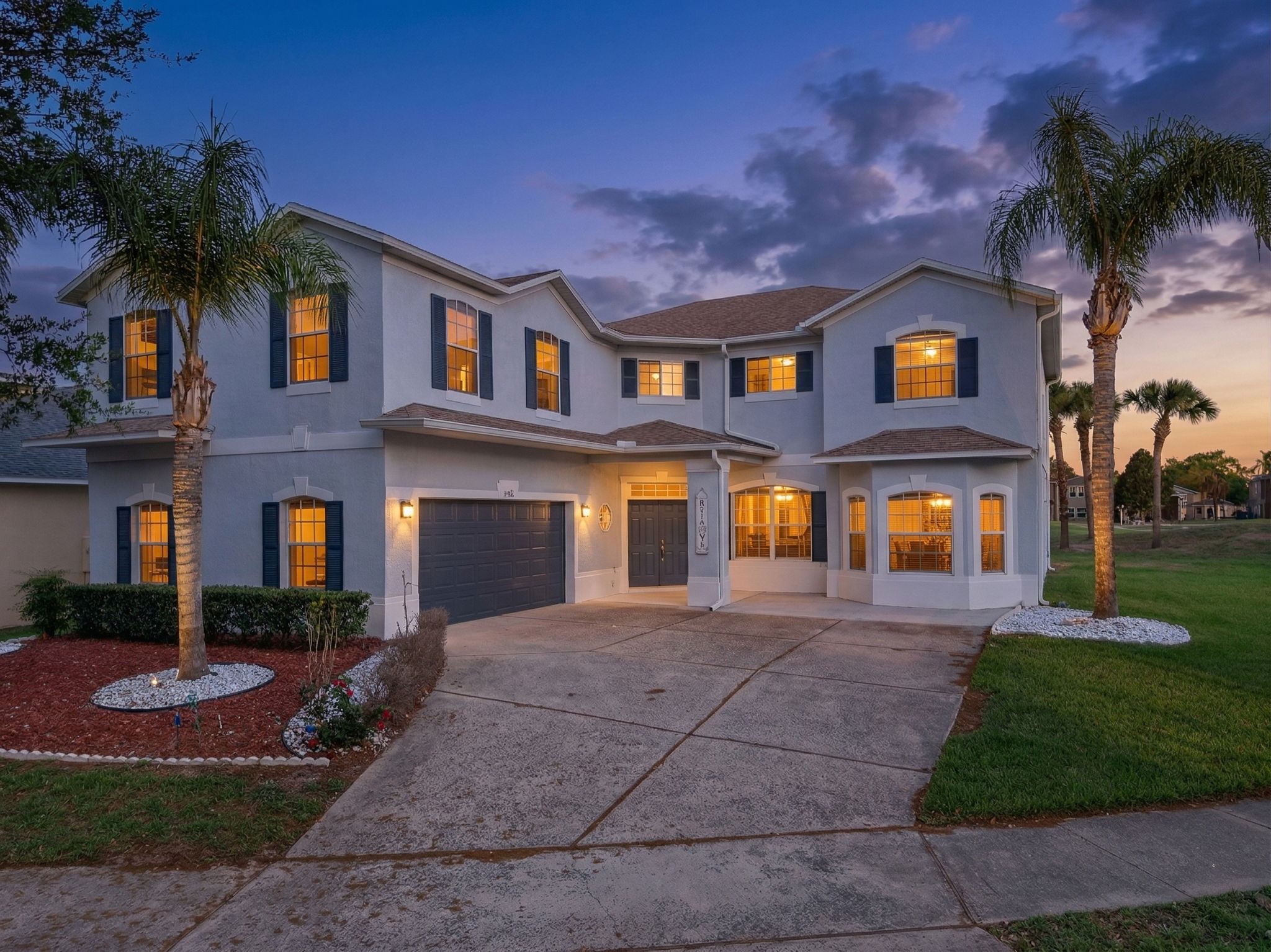
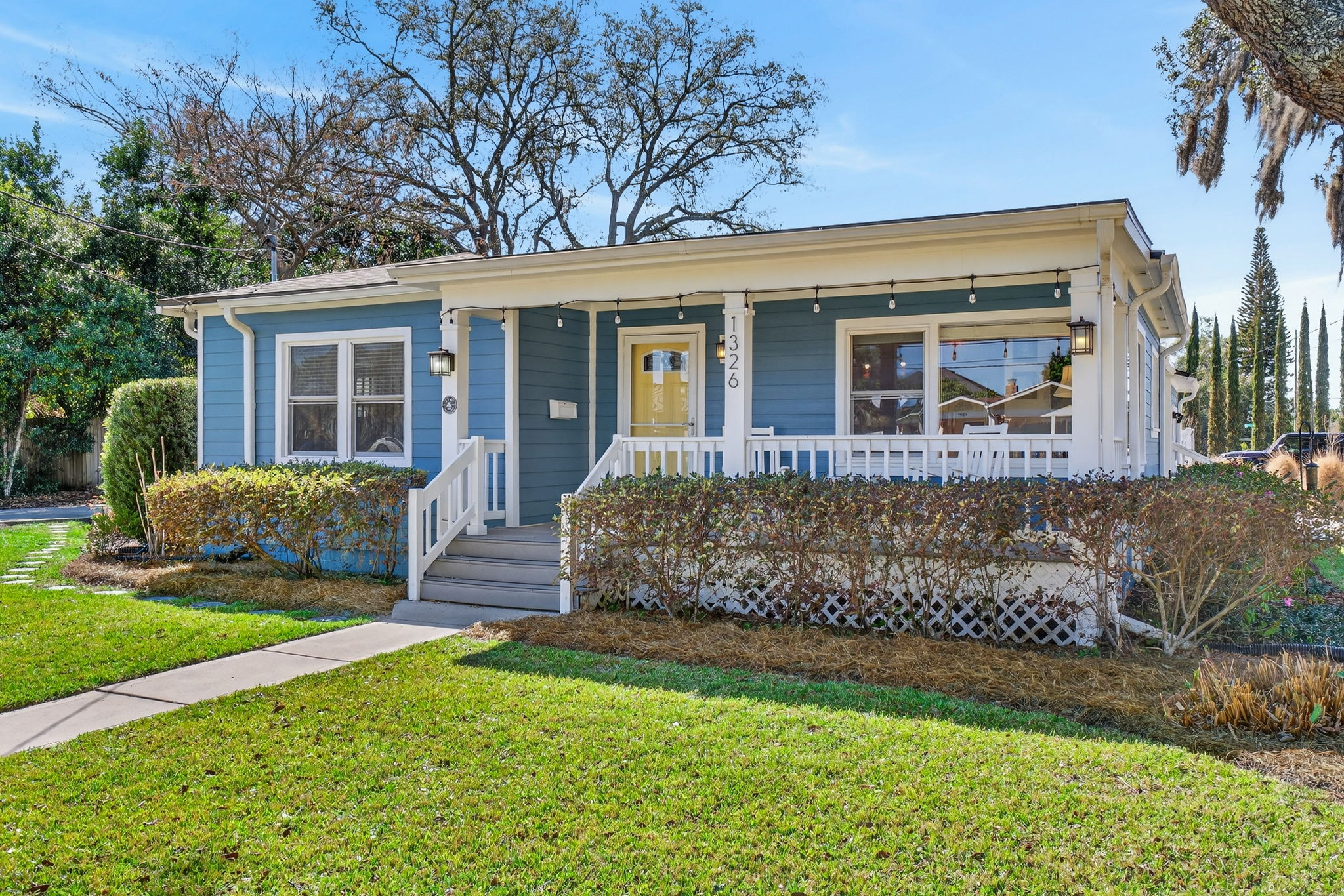
We shoot a lot of listings in this ZIP. The visual language is consistent: wide setbacks, mature trees throwing dappled light across front yards, and a mix of 1920s Mediterranean Revival and mid-century modern homes that photograph with actual character. The blocks north of Park Avenue between Interlachen and Palmer give you the canopy shots that stop a scroll. The lakefront properties along the Chain of Lakes deliver the water views, but the real differentiator is the tree cover. You can't fake a 90-year-old live oak in post.
Golden hour here runs about 45 minutes before sunset in winter, closer to an hour in summer. The light filters through the canopy and hits stucco and brick in a way that makes even a modest 1950s ranch look like it belongs in a design magazine. We've shot properties where the front yard was the entire marketing story, no pool, no lake view, just the approach through the trees and the way the porch catches the last light of the day.
Park Avenue itself is a different animal. If the listing is within two blocks of the corridor, the shoot includes the walkability angle: coffee shop exteriors, the Saturday farmers market setup at Central Park, the brick crosswalks. Buyers shopping
are paying for proximity to that corridor, so the reel needs to show it. We'll walk the block, capture the street trees, then cut to the listing's front door. The narrative is: you live here, you walk here, this is the daily.The lakefront properties, Kraft Azalea Garden, the eastern edge of the ZIP along Lake Osceola, require a different approach. Drone stills at 150 feet to show the water context, then ground-level shots at the dock or seawall to give the buyer the first-person view they'll have with morning coffee. The water is calm most mornings; we shoot early to avoid afternoon chop and the harsh overhead light that flattens everything.
What we don't shoot: the I-4 corridor, the commercial stretch along Fairbanks. If a listing backs to traffic or sits near the ZIP's western edge where the character thins out, we frame tight on the property itself and let the interior carry the story. Not every home in 32789 gets the Park Avenue halo, and pretending otherwise just sets the wrong expectation for showings.
Winter Park 32789 delivers the walkable brick streets and oak canopy everyone pictures, but it also delivers the parking squeeze, the HOA layers, and the price premium that comes with all of it. If you're deciding whether those trade-offs fit your life, the best move is to see how the neighborhood actually shows up on camera, not the postcard version, but the real light, the real scale, the real block. We shoot listings here every month, and the properties that move fastest are the ones where the media matches what a buyer will find when they walk the street. You can see recent shoots across Central Florida or subscribe to The Central Florida Brief if you're tracking Winter Park and want the market updates that matter before they hit the portals.