The fastest way to spot unsafe drone advice is an absolute statement: under 400 feet is always legal, night flights are prohibited, or the seller owns the airspace, so permission is enough. Each statement collapses several different rules into one sentence.
For a real estate agent, the practical question is simpler: what should be verified before aerial media is promised to a seller or added to a launch schedule?
The short answer
Before a Florida real estate drone shoot, verify the pilot's Part 107 status, aircraft registration and Remote ID compliance, the address's airspace and authorization requirements, any temporary flight restrictions, the planned operation over people or vehicles, property access and consent, and safe weather. A seller's permission does not grant FAA airspace authorization.
This guide is operational information, not legal advice. The FAA and the current Florida Statutes remain the source of truth.
Does a real estate drone pilot need Part 107 certification?
The short answer
Yes. A flight conducted for a business purpose, including photos or video used to market a property, falls under the FAA's Part 107 framework. The person operating the controls must hold a Remote Pilot Certificate with a small UAS rating or be directly supervised by a certificated remote pilot who can immediately take control.
The rule is based on the purpose of the operation, not whether the agent separately pays a "drone fee." A photographer cannot convert marketing work into a recreational flight by bundling it into a package or saying the aerial images were free.
An agent does not need to memorize the pilot's certificate number. The useful due-diligence questions are:
- Who is the Remote Pilot in Command for this operation?
- Is that person's aeronautical knowledge current?
- Is the aircraft registered for Part 107 use?
- How will the pilot check airspace and temporary restrictions?
- What conditions would cause the flight to be delayed or declined?
The FAA requires Part 107 certificate holders to complete recurrent training within the applicable 24-calendar-month window. A professional operator should be able to explain the process plainly.
Is every flight legal below 400 feet?
No. The 400-foot limit is not a universal permission slip.
Uncontrolled airspace can permit a routine Part 107 operation when the other rules are satisfied. In controlled airspace around airports, the pilot must receive an FAA airspace authorization before flying. The FAA's Low Altitude Authorization and Notification Capability, or LAANC, can process many eligible requests near real time. Other operations may require further coordination or a request through DroneZone.
The altitude displayed on a UAS Facility Map is also not an authorization by itself. It tells a pilot what may be eligible for authorization in that grid. The pilot still has to request and receive it.
That distinction matters across Central Florida. A property can look far from a runway on a street map and still sit in controlled airspace. Another property closer to a small airport may fall outside the controlled surface area. The address must be checked, not guessed.
Can a Part 107 pilot fly at night?
The short answer
Part 107 can allow routine night operations without a waiver when the pilot has completed the required updated training and the drone uses anti-collision lighting visible for at least three statute miles. A night flight in controlled airspace still requires the applicable airspace authorization.
This is one place where older online articles are now misleading. The answer is no longer simply "night flights require a waiver." The conditions of the current operation matter.
Twilight real estate work should also distinguish the photography schedule from the drone schedule. A ground camera can continue after the aircraft must land because of weather, airspace conditions, visibility, or another operational limit.
Can the drone fly over people or moving cars?
Current FAA rules provide categories and conditions for certain operations over people and moving vehicles. They do not authorize every aircraft to fly directly over a busy open house, neighborhood event, or active roadway.
The Remote Pilot in Command must determine whether the aircraft and operation qualify. For a routine listing, the safer production plan is usually to control the immediate area, avoid sustained flight over uninvolved people, and choose flight paths that reduce exposure to moving traffic.
If a photographer dismisses the question with "the rules changed, so it is allowed now," ask which operating category and aircraft requirements apply. A rule change is not the same as an unrestricted operation.
What does Remote ID change?
The FAA describes Remote ID as the ability of a drone in flight to provide identification and location information that can be received by other parties. Drones required to be registered must comply with Remote ID unless operated inside a recognized identification area under the applicable exception.
For an agent, this belongs on the operator's aircraft-compliance checklist. It is not something the seller has to configure. It is another reason to hire a company operating an accountable commercial fleet rather than an unknown pilot who happens to own a camera drone.
What does Florida privacy law cover?
Florida Statute 934.50 addresses drone imaging used with the intent to conduct surveillance where a person has a reasonable expectation of privacy. The statute includes written-consent language and defines surveillance with more precision than simply "a neighboring roof appeared in the background."
For listing work, use a conservative production practice:
- Obtain seller authorization for aerial photography.
- Tell occupants when the exterior flight is expected.
- Avoid lingering over adjacent private property.
- Frame the listing and relevant context rather than documenting neighbors.
- Keep access permission and flight authorization in the job record.
Seller consent does not override federal airspace rules, and an FAA authorization does not create permission to enter private property for takeoff or landing. Those are separate approvals.
What should the agent send before the appointment?
Send the complete address, desired deliverables, target launch date, seller or occupant confirmation, gate or access instructions, and any known constraints such as an open house, roof work, schools, crowds, cranes, or construction nearby.
Do not promise a specific aerial angle before the pilot evaluates the site. Weather, sun direction, airspace ceilings, obstacles, people, and adjacent property can change what is safe and useful.
The listing-day drone checklist
- Confirm the address and property access.
- Confirm the assigned Remote Pilot in Command.
- Check controlled airspace and obtain authorization when required.
- Check temporary flight restrictions, NOTAMs, weather, and local ground restrictions.
- Confirm aircraft registration and Remote ID compliance.
- Plan around people, vehicles, obstacles, and neighboring property.
- Brief the seller or occupant on the expected exterior window.
- Record why the flight proceeded, changed, or was postponed.
How this applies across ASM's Florida coverage
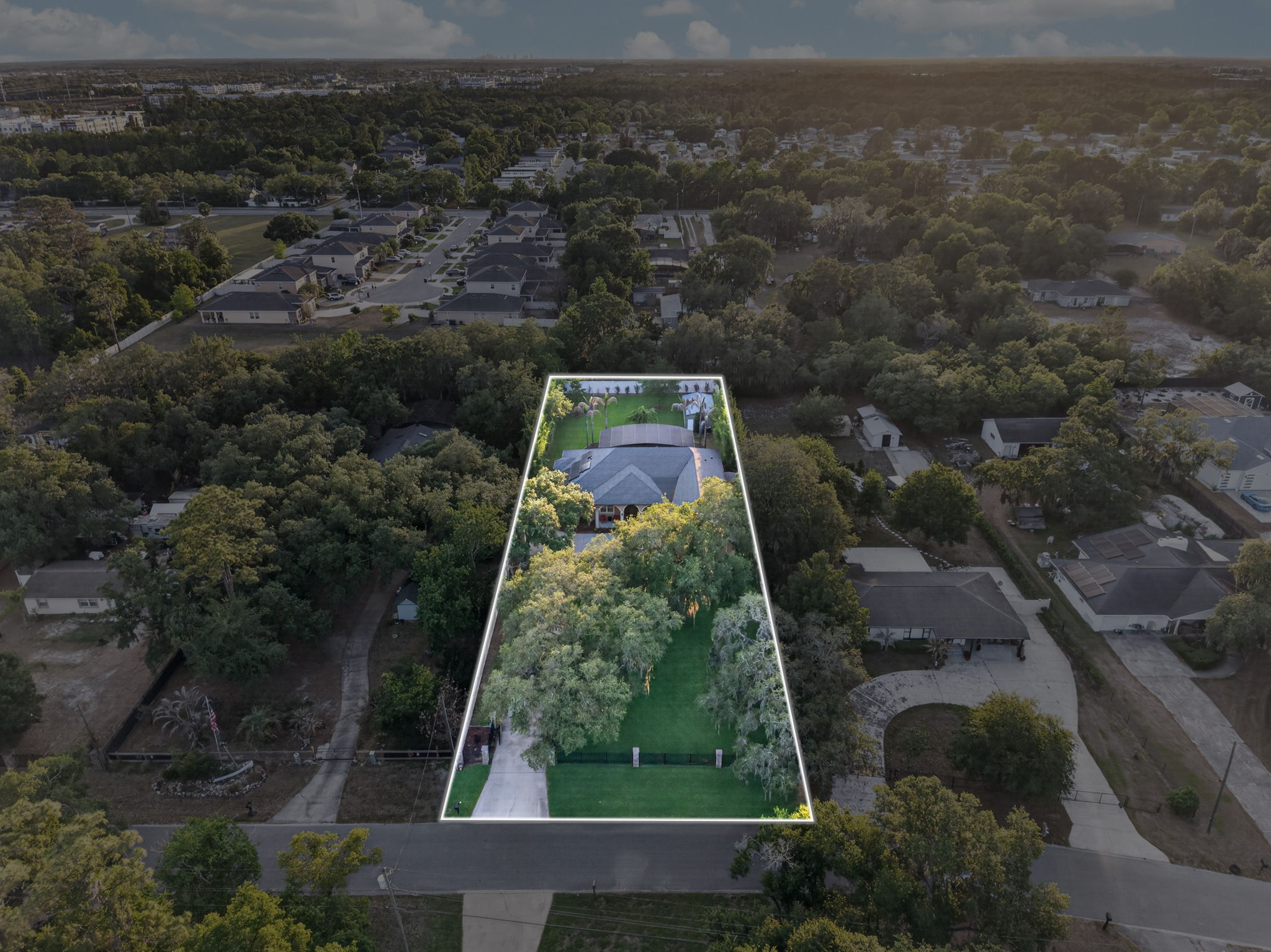
The legal framework is federal and statewide, but the operational context changes by address. Orlando and Altamonte Springs contain multiple airport and heliport considerations. Tampa has complex urban and airport-adjacent airspace. Lakeland and Winter Haven also require address-level airport checks. Clermont often benefits visually from terrain, water, and community context, but the same preflight process still applies.
ASM's real estate drone photography service uses the same compliance sequence for a photo-only appointment, a listing package, or a larger real estate media production.
Book a compliant drone and photography shoot after the property address and launch date are known.