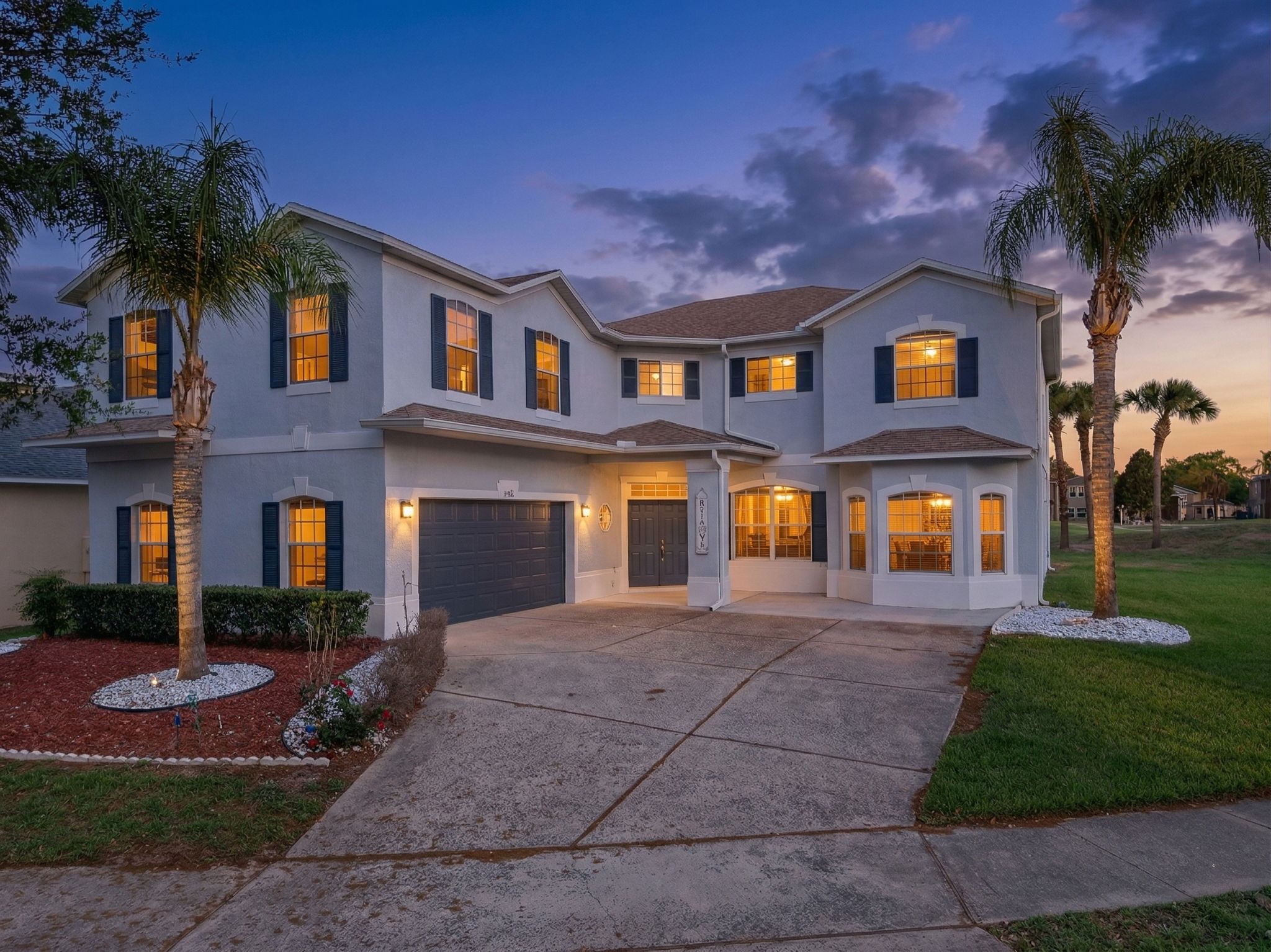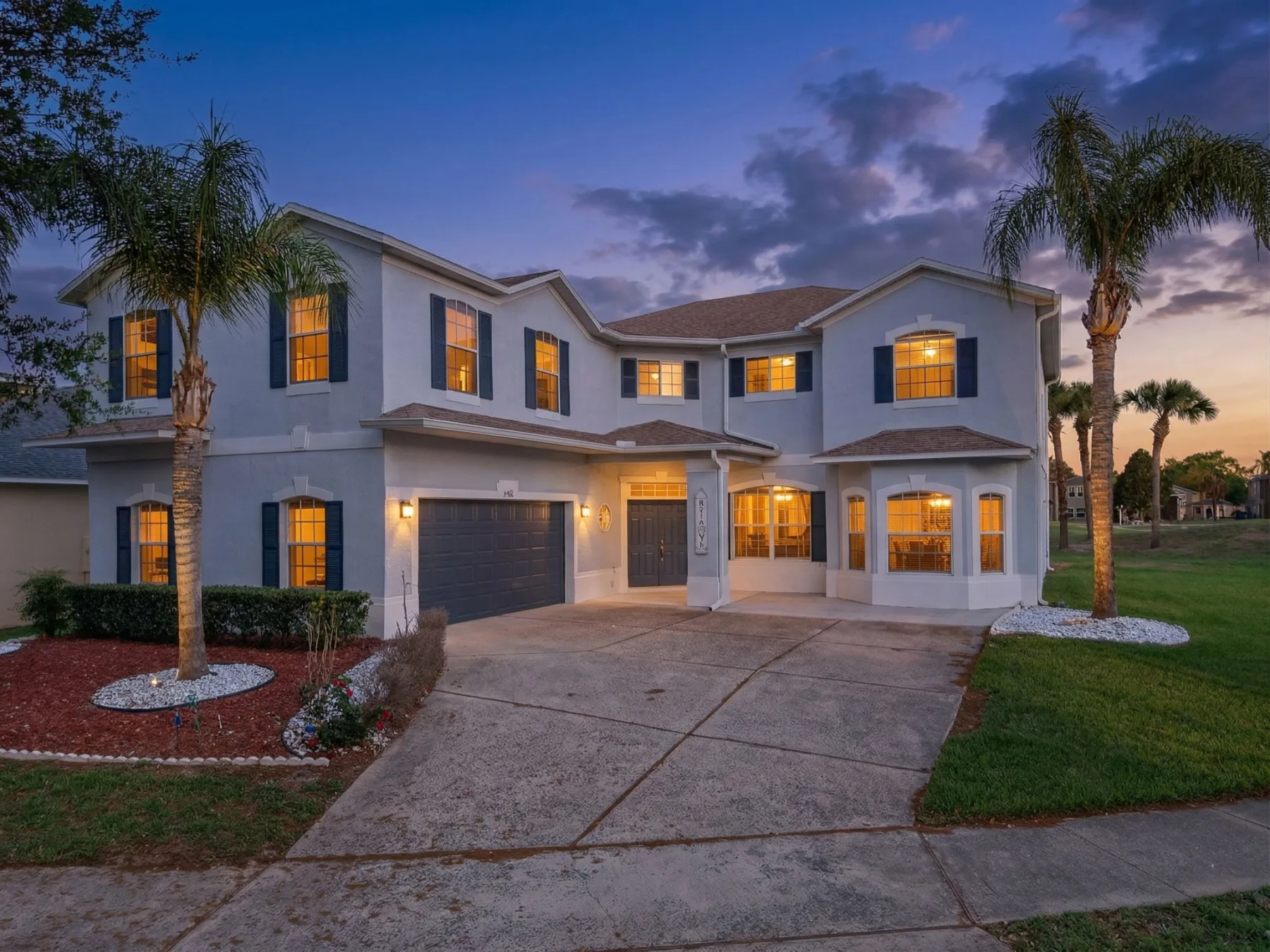
You're looking at a Lake Nona listing and the agent mentions "15 minutes to Brightline" like it's a school district. Three years ago, that line would have meant nothing. Now it's the difference between a property that moves in 22 days and one that sits for 60, because Central Florida buyers are finally treating train access the way South Florida buyers have for the last five years.
Brightline's Orlando station opened in September 2023, and the first year of ridership data tells a story that goes beyond weekend trips to Miami. Over 2 million passengers used the service in year one, 18% above projections, and the ripple effects are showing up in median prices, days on market, and the way agents are writing listing copy from Lake Nona to Clermont. The bigger shift is coming in 2028 when the Tampa extension goes live, and buyers who understand the pattern from South Florida are already positioning themselves along the corridor.
Which Orlando neighborhoods are seeing the biggest Brightline impact?
Three zones are moving fastest: the Orlando Airport corridor where Lake Nona and surrounding communities market direct station access, the I-4 properties between Orlando and Tampa positioning for the 2028 extension, and SunRail connection points where dual-transit access is becoming a premium feature. The airport zone is already pricing in the advantage.
You're looking at a Lake Nona listing and the agent mentions "15 minutes to Brightline" like it's a school district. That's the tell. The Orlando Airport station sits at the center of what's becoming Central Florida's first true transit-oriented market, and the neighborhoods within a ten-minute drive are treating proximity the way coastal markets treat walkability.
We shot 12 listings in Lake Nona's Laureate Park last quarter, and eight of those listing descriptions called out the airport-Brightline connection in the first paragraph. Not buried in amenities, lead feature.
, which beat projections by 18%, and the airport corridor neighborhoods are the ones capturing that demand first.The second zone is speculative but moving: I-4 properties between Orlando and Tampa, especially around Lakeland. Brightline secured $3.2 billion in tax-exempt bonds for the Tampa extension, and Lakeland approved $1.2 million in infrastructure improvements around the proposed downtown station site. Our drone footage requests for properties along that corridor jumped 40% in 2024 versus the year prior. Buyers are betting early, and sellers in Polk County are starting to price like the station is already built.
The third zone is quieter but worth watching: anywhere SunRail and Brightline will eventually connect.
following the Brightline opening suggests the two systems are feeding each other. Properties near SunRail stations in Winter Park, Maitland, and Sanford are starting to market dual-transit access, and that's a feature set Orlando has never had before.If you're buying in any of these three zones in the next twelve months, the question isn't whether Brightline matters. It's whether the premium is already fully priced in or if there's still room to capture appreciation before the Tampa line opens in 2028.
What does the Tampa extension mean for buyers in 2026?
The Orlando-to-Tampa extension won't open until late 2028, but properties along the I-4 corridor between the two cities are already seeing speculative interest. Lakeland approved $1.2 million in station-area infrastructure, and
signals the project is funded and moving.If you're buying in Polk County or anywhere along the proposed route in 2026, you're betting on 2028. The station locations aren't finalized, but Lakeland's downtown site is the most concrete so far. That means properties within a mile or two of downtown Lakeland are pricing in a future where you can board a train to Orlando Airport in 30 minutes or Tampa in 20.
The risk is timing. Two years is long enough for a recession, a rate spike, or a project delay. South Florida's experience offers a benchmark:
appreciation premium for properties within 0.5 miles of Brightline stations
We've seen the early signal in our own work. Drone requests for properties along the corridor jumped 40% in 2024 versus the year before. Agents aren't waiting for the ribbon-cutting to start positioning listings as "future Brightline access."
The play for buyers in 2026 is selective. If you're looking at a Lakeland property and the seller is pricing in the station premium already, you're paying for something that doesn't exist yet. If you're finding a deal in Haines City or Auburndale and you're willing to hold through 2028, the upside is real. Just don't confuse a bond issuance with a train schedule.
The other variable is SunRail. If the Tampa extension connects to SunRail's southern terminus, properties near Poinciana or Kissimmee stations could see dual-transit appeal. That's speculative, but it's the kind of speculation that moves markets two years early.
Should you buy near a station before the train arrives?
South Florida properties within half a mile of Brightline stations showed an 8% appreciation premium compared to similar homes 2-3 miles away, but Orlando's story is different: the train is already running, ridership exceeded projections by 18% in year one, and the premium is already baked into asking prices near the airport station. If you're buying for the Tampa extension, you're speculating on 2028 service that may shift station locations before groundbreaking.
The question assumes you're early. You're not. Brightline Orlando opened in September 2023, and by the time the first anniversary rolled around,
had already ridden the line, 18% above the company's own projections. Sellers near the airport station knew that six months before you did, and the listings reflect it.We shot 12 homes in Lake Nona's Laureate Park last quarter, and eight of those listing descriptions mentioned airport or Brightline proximity in the first paragraph. The premium isn't coming; it arrived with the ribbon cutting.
appreciation premium for properties within 0.5 miles of South Florida Brightline stations
The Tampa extension is a different play. Virgin Trains secured $3.2 billion in bonds for the Orlando-to-Tampa build, and Lakeland approved infrastructure spending around a proposed downtown station site. But "proposed" is the word that should slow you down. Station locations shift during engineering. Lakeland's site could move four blocks east and take the walkability premium with it. If you're buying a Winter Haven duplex because you think a Brightline stop is coming in 2028, you're betting on a map that hasn't been finalized.
The smarter move: buy where the train already stops and the ridership data is real, or buy where you'd want to live even if the extension stalls. SunRail ridership jumped 23% after Brightline opened, which tells you the connectivity effect is real when both lines are running. Properties near SunRail stations that will eventually connect to Brightline (Sanford, Longwood, Maitland) are the hedge. You get the existing commuter rail now and the intercity link later, if it comes.
Drone requests for properties along the proposed Tampa corridor were up 40% in 2024 compared to the prior year, which means agents are already positioning those listings as future transit hubs. The market is pricing in the optimism. Your job as a buyer is to price in the risk.
How does the SunRail connection change the equation?
SunRail ridership jumped 23% after Brightline opened, and the neighborhoods where both lines converge (downtown Orlando, the airport corridor, and future Winter Park stops) are seeing dual-transit premiums. Buyers who need both commuter rail and intercity access now have a reason to pay more for that overlap.
The morning SunRail northbound out of downtown Orlando smells like coffee and sounds like laptop keyboards. Commuters heading to Maitland, Sanford, the research corridor. Brightline runs the same track south to the airport, then splits toward Miami. Where those two systems meet, you're not just near a train. You're near two different kinds of mobility, and the market is starting to price that in.
The overlap zones are downtown Orlando (where both lines share track), the airport district (where Brightline terminates and SunRail runs parallel along the 528 corridor), and the planned Winter Park station that would connect both services. If you work in Maitland but fly to Miami twice a month, or you commute to downtown but your partner works at the airport, that's the sweet spot. South Florida showed an 8% appreciation premium within half a mile of Brightline stations; the dual-access zones here could see something similar as both systems mature.
The catch: SunRail still runs limited weekend service, and Brightline's Orlando frequency is every two hours, not every twenty minutes. The infrastructure is there, but the schedule density isn't yet. Buyers banking on this overlap need to look at 2026-2027 ridership projections, not today's timetable. If both systems add frequency (and the ridership bump suggests they will), the properties within walking distance of a shared stop start to look like the kind of transit-oriented density that commands a premium in older cities.
We shot a Signature reel last month for a condo listing two blocks from Church Street Station, where SunRail and Brightline both stop. The agent's pitch was simple: park your car Friday, take SunRail to work Monday through Thursday, take Brightline to Miami Friday night. The listing went under contract in eleven days, and three of the four offers mentioned the train access in their letters.
If you're buying in 2026 and you know you'll use both systems, the overlap zones are the play. If you're only ever using one or the other, you're paying for infrastructure you won't touch.
What should sellers know about marketing Brightline proximity?
Lead with what exists today (airport access and Miami connection), not what might arrive in 2028. Properties within half a mile of the Orlando station carry measurable appeal to buyers who travel for work or want weekend access to South Florida. The play is honest positioning, not speculative premium.
The data from South Florida tells you what to expect.
appreciation premium for properties within 0.5 miles of Brightline stations vs comparable homes 2-3 miles away
If you're listing near the Orlando Airport station right now, the angle is dual access: a buyer can park and ride to Miami for the weekend, or meet a client flying into MCO without sitting in I-4 traffic. We shot 12 listings in Lake Nona's Laureate Park last quarter, and eight of those agents wrote Brightline proximity into the description. The ones that moved fastest framed it as a time-saver, not a luxury.
For properties along the proposed Tampa corridor (Polk County, eastern Hillsborough), the honest play is "positioned for future service" with a date attached. Lakeland committed
in infrastructure improvements around the proposed downtown station site
The SunRail overlap zones (where a buyer can reach both systems) are the quiet opportunity.
suggests people are using both, not choosing one. If your listing sits near a SunRail stop with a one-seat ride to the Brightline hub, that's the line: "commute to downtown Orlando, weekend to Miami, no car required."What not to do: claim a premium before the buyer can verify it. The station has to be walkable or a short drive, the service has to run, and the listing has to show the buyer how they'd actually use it. The morning light hitting the platform at the Orlando station makes for a strong exterior shot if the property is close enough to include it in the reel, but only if it's true.
The bottom line
Brightline Orlando isn't theoretical anymore. The train runs, the stations are open, and the market is already pricing in proximity. Whether you're buying near a station in 2026 or selling a property that benefits from the connection, the play is the same: understand what the rail actually delivers, not what the hype promises. We shot 12 listings in Lake Nona's Laureate Park last quarter, and 8 of those listing descriptions led with airport and Brightline access. The buyers who care are already here.
If you're tracking neighborhoods along the corridor or watching how the SunRail tie-in reshapes commute math, subscribe to The Central Florida Brief for the weekly market pulse. And if you want to see how we're shooting properties that benefit from transit proximity, browse our recent shoots in Central Florida to see the angles that move these listings.